 June
08
June
08
Tags
4 Wild Cases of Scientific Misconduct: When Scientists Go Rogue
In order to do good science, scientists must follow the principles of scientific ethics in every aspect of their work, from data collection to publications. Scientific misconduct is a very serious issue that affects not just academia, but also the public at large. New medical treatments and cutting-edge technology are built off of basic research into the intricacies of the human body and the world around us. If the foundation of these new technologies is supported by falsified data, flimsy conclusions, or unethical practices, then we are risking human lives and eroding trust in the scientific process.
One well known example you may know of is the case of Andrew Wakefield. Wakefield published a paper that claimed that the MMR vaccination caused autism in the reputable medical journal, The Lancet [1]. This paper has since been retracted (removed from the academic journal) and debunked. If you’re interested in learning about how poorly this study was done, check out this YouTube video on the topic. The false findings presented in this paper have had and continue to have devastating effects on public health around the world since its publication. Anti-vaccination sentiments grew significantly. People grew to fear vaccines and refused to vaccinate themselves and their children. An increase in measles outbreaks soon followed. During the height of the COVID-19 pandemic, it’s very clear that vaccines continue to be a contentious issue for some individuals.
Scientific misconduct has happened many times over the centuries, but very few have entered the public consciousness. This article will cover four lesser-known cases of scientific misconduct that illustrate a variety of ethical issues in scientific research and how these fraudsters get caught.
Hwang Woo Suk – “The Hero of South Korea”
Human cloning is not just a trope in science fiction. Since 2013, it has been possible [2] to clone human embryos from embryonic and other cells. Before 2013, though, scientists around the world attempted to clone human embryos for years unsuccessfully, until one Hwang Woo Suk broke into the scene.
Hwang Woo Suk is a South Korean scientist and veterinarian who was an expert in stem cell research and animal cloning [3]. He made headlines in 1999 for creating the first cloned dairy cow, named “Yeongrong-i.” He went on to clone a second cow, named “Yin-i” and claimed to clone a genetically modified pig for organ transplants and a bovine spongiform encephalopathy (BSE, or mad cow disease)-resistant cow. He also announced plans to clone the endangered Siberian tiger [3-5]. No peer-reviewed research papers were produced from any of these claims, which raised suspicions in the scientific community. In spite of these concerns, Hwang was gaining notability in Korea for his scientific achievements.

His notability would only skyrocket in 2004 after he published a paper in Science, claiming that he and his team successfully created cloned human embryos for the first time using the ‘somatic cell nuclear transfer method’. If you’ve heard of Dolly the Sheep, you may be familiar with this method. Essentially, the nucleus (the part of a cell where you find DNA) from a somatic cell, or “body” cell, is transferred to an egg cell that has had its nucleus removed. The egg cell then develops as usual and produces an individual with the same genetic makeup of the host cell donor – a clone. For decades, researchers have attempted to produce patient-derived human embryonic stem cells (hESCs) using this method, which would undoubtedly revolutionize medicine. Every attempt had been unsuccessful until Hwang’s 2004 report. Additionally, in 2005, Hwang published another Science paper claiming that his team had developed 11 patient-specific stem cell lines from human eggs. This groundbreaking work led to Hwang being selected as a “Supreme Scientist” in Korea and he soon became the first director of the new World Stem Cells Hub at the Seoul National University Hospital (SNU) [3-5].
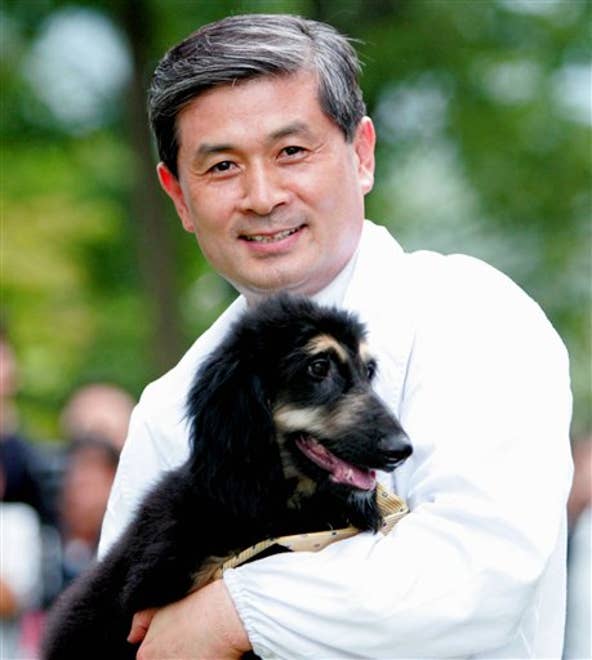
Hwang quickly rose to hero status in Korea after these discoveries, but his fall into disgrace was just as fast. Ethical concerns about his research quickly popped up. Hwang reportedly used 242 human eggs for his 2004 paper [5]. The question was: did he get these eggs ethically? Gerald Schatten, a scientist who worked closely with Hwang on this project, answered this unexpectedly with a resounding “no.” A popular Korean investigative journalism show, PD Su-cheop, reported on this story, putting Hwang’s potentially unethical behavior in the spotlight. It was revealed that two junior female researchers may have been forced to donate their eggs for the 2004 study [6]. Additionally, it seems that other egg donors were paid for their donations, which is illegal in Korea and many other countries. Hwang himself admitted that the allegations were true and apologized, claiming that he was unaware of these issues. He then stepped down from his position at the World Stem Cells Hub. Hwang’s apologies were met with overwhelming support from the Korean public. In fact, many Korean women started donating their own eggs to aid Hwang’s research. Meanwhile, PD Su-cheop faced such intense backlash, that many of the companies that sponsored the show swiftly withdrew their financial support [4]. Despite the public support, a formal investigation was called for and launched by SNU in December 2005. The university’s investigation concluded that all of the data in Hwang’s 2004 and 2005 paper were fabricated. All 11 of the “patient-specific” cell lines were falsified. No human embryos were cloned. In the end, Hwang again made a public apology and was fired from SNU. South Korea’s hero was now one of its biggest embarrassments.
Yoshitaka Fujii – The Most Prolific Fabricator
Before publishing research articles in scientific journals, the articles go through a review and editing process by other highly qualified researchers in the same field to ensure that high-quality and interesting papers are being accepted. Unfortunately, papers with errors or fraudulent data can still slip through the cracks, as demonstrated by the work of Hwang Woo Suk. Still, retractions are quite rare and very few scientists have even one retracted article. However, for some, their number of retractions can reach double, or for this next scientist, triple digits.

Yoshitaka Fujii was a Japanese researcher in anesthesiology. He received a medical degree from Tokai University School of Medicine in 1987 and a PhD in anesthesiology from Tokyo Medical and Dental University in 1991. In 2005, Fujii assumed the position of associate professor in anesthesiology at Toho University. The main focus of his research was conducting clinical trials for drugs that aimed to reduce nausea and vomiting after surgery [7]. Fujii had a productive research career, publishing over 200 papers by 2012. He may have gone on to publish even more papers if he hadn’t been exposed for being “the biggest fabricator in science”.
The validity of Fujii’s work first came into question in 2000. Peter Kranke, Christian Apfel, and other anesthesiologists wrote a letter to the editor of the journal Anesthesia & Analgesia that called into question the results of a paper published by Fujii, calling the data “incredibly nice” [8]. To be clear, they were being facetious. The data in many of Fujii’s papers looked too good to be true. Unfortunately, these allegations were not taken seriously. Fujii dismissed these claims outright and the journal continued to publish his papers. Fujii continued his work as usual for 10 years before anyone decided to actually investigate [8].
In 2010, Steve Yentis, the editor-in-chief of the journal Anesthesia, published an editorial that again called out Fujii’s findings and the field of anesthesiology at large for the lack of action against spurious studies. This editorial, and the journal, received backlash from many readers who felt that the responsibility of weeding out bogus articles should fall on the publishers. Yentis countered this claim and challenged one of the letter writers, John Carlisle, to investigate Fujii. Although Carlisle did not have a background in statistics, he set out to conduct a statistical analysis of Fujii’s data. Separately from Carlisle, Toho University started its own investigation on Fujii [7, 8].
Toho University found that of the 9 studies Fujii conducted at Ushiku Aiwa General Hospital, only one of the studies was approved by the hospital’s ethics committee. The other 8 studies were deemed “fraudulent”. Carlisle’s own investigation found that the odds that the results found in 168 of Fujii’s publications were due to experimental intervention were “infinitesimally small,” meaning that these findings were likely not real. A full-scale investigation by a committee of Japanese anesthesiologists took place shortly after. They reviewed 212 publications. Upon the conclusion of the investigation, it was reported that only three of the 212 papers were valid. Yes, you read that correctly: 3 out of 212 [7-9].
In 2012, Fujii was dismissed from his position at Toho University. As of 2023, Fujii has had 183 papers retracted, the most ever recorded for a single author.
Jan Hendrik Schon – The Semiconductor Superstar
Scientific fraudsters are not only a life sciences phenomenon, as shown by the next two cases. Jan Hendrik Schon was a German physicist who specialized in condensed matter physics and nanotechnology. He received his PhD from the University of Konstanz in 1997 and was promptly hired to work at Bell Labs [10]. Schon made a name for himself for his breakthroughs on semiconductor technology.

Before we get into that, let’s define some terms. A conductor is a substance that can conduct electricity, such as metals. An insulator is the opposite; they cannot conduct electricity. A semiconductor is somewhere in between. Semiconductors are integral in our lives due to their extensive use in electronics. Take a moment to look at all the electronics around you. The smartphone in your hand, the LED light bulbs above you, the smartwatch on your wrist – they all have semiconducting materials in them that allow them to use electricity to operate. One important thing you need to know about semiconductors is that they are made of inorganic crystals. Silicon crystals are very commonly used.
Now, back to Schon. At Bell Labs, Schon worked to produce semiconductors that used organic crystals. However, shortly after starting his research, Schon made a discovery that shook the physics world. He had discovered a way to transform organic crystals into transistors, tiny semiconductor devices. This finding would be revolutionary to the field and society at large. Researchers would be able to replace silicon crystals with organic materials, making it possible to produce smaller transistors – smaller than silicon would allow. Electronic devices would be cheaper and easier to produce.
Schon published papers in prestigious journals, like Nature and Science, detailing his research. He reported new amazing breakthroughs. Schon claimed to have produced single-molecule transistors, lasers from organic crystals, and organic superconductors. By 2001, Schon was listed as an author on a new paper every eight days. He also received the Otto-Klung-Weberbank Prize for Physics, and the Outstanding Young Investigator Award of the Materials Research Society the following year in 2002 [10]. Schon was, supposedly, in the running for a Nobel prize, which is quite stunning considering that he had finished graduate school only five years before.
However, things soon took a turn for the worse for Schon. A couple of researchers from Bell Labs noticed some things were off in Schon’s papers. They got in contact with a Princeton physics professor, Lydia Sohn, who worked with a Cornell University physics professor, Paul McEuen, to investigate the allegations. These investigations found numerous instances of duplicated data in Schon’s body of work. Schon had reused the same set of figures as evidence for multiple completely different experiments [10-13]. Sohn, McEuen, and other physicists tipped off Bell Labs management, who then established a formal committee to investigate Schon. On September 25, 2002, Bell Labs released the committee’s report. 24 allegations of scientific misconduct had been made against Schon and the committee had found evidence of misconduct in 16 of the cases [13].
Schon was promptly fired from Bell Labs after the release of the report. And, to make things even worse, the University of Konstanz revoked Schon’s PhD due to his “dishonorable conduct.” That is a severe consequence that not even Hwang or Fujii received.
Ranga Dias – A Current Case to Watch Closely
Here’s another physics term you need to understand for this final researcher: superconductivity. The Department of Energy explains that superconductivity “is the property of certain materials to conduct direct current (DC) electricity without energy loss when they are cooled below a critical temperature [14].” As you can see in the image, superconductors can give off powerful magnetic fields in their superconducting state. Examples of their application include MagLev trains and Magnetic Resonance Imaging (MRI). Superconductivity has only been observed at incredibly low temperatures (around 0K or -459°F) or at incredibly high pressures, making it prohibitively difficult and expensive to expand its use into more technology. For that reason, room-temperature superconductivity has been a pipe dream for physicists for over a century. Then, in October 2020, it seemed that the dream was achieved.

Ranga Dias, a physics professor at the University of Rochester, made headlines for his team’s amazing discovery of room-temperature superconductivity with a material called carbonaceous sulfur hydride [15]. Published in Nature,This finding was initially met with excitement and curiosity from scientists around the world. Room-temperature superconductivity was seemingly within reach. A technological revolution seemed imminent. Almost immediately, though, other researchers were finding issues with the study.
A theoretical physicist at University of California, San Diego, Jorge Hirsch, was the first to report his concerns [15-17]. He noticed unusual patterns in the data regarding the measurement of “magnetic susceptibility,” or the ability of the material to produce a magnetic field, which is an important measurement for determining superconductivity. Ranga’s team released the raw data and described the method they used to generate the plot in the paper. Notably, this method differed significantly from the method they officially published. The accusations of data fabrication were enough for Nature to ultimately retract the paper in 2022 [15-17]. Dias and his team disagree with the retraction and believe that their data is credible. They plan to update and resubmit this study.

The story doesn’t end there. Dias is currently facing accusations of plagiarizing most of his PhD thesis, which was completed in 2013 at Washington State University [18]. James Hamlin, a physicist at University of Florida, noted that Dias’s thesis contained multiple identical passages from his own thesis. Hamlin, along with a colleague, performed an in-depth analysis of Dias’s thesis and found several more instances of copying from 17 other sources [18]. This analysis was validated by experts, including research ethicist Lisa Rasmussen, who called the plagiarism “obvious.” More evidence of plagiarism and data fabrication are starting to be revealed in Dias’s other papers [18].
Despite the controversies, Dias seems to be pushing forward unencumbered. In March 2023, his group published another paper describing room-temperature superconductivity in a new material containing the rare-earth metal lutetium [17]. This new study was received more cautiously, though, than the first. Additionally, Dias has founded a start-up company, called Unearthly Materials, that aims to commercialize room-temperature superconductors. As of May 2023, no research groups have been able to replicate Dias’s superconductivity claims.
Science is Human, and Humans Make Mistakes
Why does scientific misconduct happen? There are many reasons, but a major one may be the “publish or perish” mentality that is prevalent in academia. Essentially, in order to be seen as “successful,” you must publish frequently in high-impact peer-reviewed scientific journals. The more papers you produce, the more funding you can get, the more influence you have among your colleagues, and the further you can get in your career. This overwhelming pressure to be productive can push researchers to make very bad decisions.
Academics have been aware of this issue for decades, and though many are trying to shed the “publish or perish” dogma, the culture has been slow to change. In the meantime, there are many standard practices in place to prevent scientific misconduct from happening. Most, if not all, research institutions have an office that oversees research ethics and integrity. For UC San Diego, that would be the Research Compliance and Integrity Office. These institutions often require researchers to undergo ethics training and have guidelines and protections in place for researchers to report ethics violations. Research institutions are also federally required to have Institutional Review Boards (IRB) and Institutional Animal Care and Use Committees (IACUC) to review and monitor research that involves human subjects and animals, respectively. Individual researchers are obligated to use proper controls, sampling, and statistical analyses in their experiments. Academic journals enlist experts to review submissions and reject studies that fail to meet the standards of the field.
It’s clear that some fraudulent studies can slip through the cracks, but it’s important to note that cases like the ones highlighted in this article are rare, and that scientific fraudsters do eventually get caught. There are millions of scientists in the world that aim to uphold scientific ethics in their work and ensure that their colleagues do the same. If you want to see this for yourself, check out the Retraction Watch website and database, which keeps track of retracted papers. Additionally, the website PubPeer allows scientists to provide and receive feedback on publications. Finally, if you want to try your hand at some science sleuthing, check out microbiologist and scientific integrity consultant Elisabeth Bik’s twitter. Science is a team effort, so the only way to keep it honest is to work together.
Special thanks to Dr. Hugo Kim and Luke Herman for the inspiration.
Works Cited
- Godlee, F., Smith, J., & Marcovitch, H. (2011). Wakefield’s article linking MMR vaccine and autism was fraudulent. BMJ, 342, c7452–c7452. https://doi.org/10.1136/bmj.c7452
- Tachibana, M. (2013). Human Embryonic Stem Cells Derived by Somatic Cell Nuclear Transfer. Cell, 153(6), 1228–1238. https://doi.org/10.1016/j.cell.2013.05.006
- Craine, A. G. (2022). Hwang Woo-Suk. Encyclopedia Britannica. https://www.britannica.com/biography/Hwang-Woo-Suk
- Hong, S. (2008). The Hwang Scandal That “Shook the World of Science.” East Asian Science, Technology and Society, 2(1), 1–7. https://doi.org/10.1215/s12280-008-9041-x
- Hwang Woo-suk. (2023). In Wikipedia. https://en.wikipedia.org/wiki/Hwang_Woo-suk
- Clay, A. S. (2014). Hwang Woo-suk’s Use of Human Eggs for Research 2002-2005. The Embryo Project Encyclopedia. https://embryo.asu.edu/pages/hwang-woo-suks-use-human-eggs-research-2002-2005
- Yoshitaka Fujii. (2021, November 28). Wikipedia. https://en.wikipedia.org/wiki/Yoshitaka_Fujii
- Marcus, A., & Oransky, I. (2015, May 11). How the Biggest Fabricator in Science Got Caught. Nautilus. https://nautil.us/how-the-biggest-fabricator-in-science-got-caught-235421/
- Yoshitaka Fujii and Medical Research Fraud. (2019, May 6). WikiBooks. https://en.wikibooks.org/wiki/Professionalism/Yoshitaka_Fujii_and_Medical_Research_Fraud
- Schön scandal. (2020, May 8). Wikipedia. https://en.wikipedia.org/wiki/Sch%C3%B6n_scandal
- Garisto, D. (2022, August 8). September 2002: Schön Scandal Report is Released. APS. https://www.aps.org/publications/apsnews/202209/history.cfm
- Cassuto, L. (2002, September 18). Big trouble in the world of “Big Physics.” The Guardian. https://www.theguardian.com/education/2002/sep/18/science.highereducation
- Yin, Z. (2007). Jan Hendrik Schön scandal [PowerPoint Slides]. Department of Physics. UC Davis. http://yclept.ucdavis.edu/course/280/Schoen.Yin.pdf
- DOE Explains…Superconductivity. (n.d.). Department of Energy. https://www.energy.gov/science/doe-explainssuperconductivity
- Bushwick, S. (2023, March 10). Controversy Surrounds Blockbuster Superconductivity Claim. Scientific American. https://www.scientificamerican.com/article/will-controversy-sink-this-superconductivity-breakthrough/
- Hand, E. (2022). “Something is seriously wrong”: Room-temperature superconductivity study retracted. Science. https://www.science.org/content/article/something-seriously-wrong-room-temperature-superconductivity-study-retracted
- Wood, C., & Savitsky, Z. (2023). Room-Temperature Superconductor Discovery Meets With Resistance. Quanta Magazine. https://www.quantamagazine.org/room-temperature-superconductor-discovery-meets-with-resistance-20230308/
- Garisto, D. (2023). Plagiarism allegations pursue physicist behind stunning superconductivity claims. Www.science.org. https://www.science.org/content/article/plagiarism-allegations-pursue-physicist-behind-stunning-superconductivity-claims
 NeuWrite San Diego