 February
06
February
06
Tags
Déjà Vu: Have We Been Here Before?

SEEING THE FUTURE
Remember that time you were sitting in the lunch hall with your friend and they were telling you a story that you thought you’d heard before? Not only that, but you also felt like the exact experience you were having had already happened. The scene was so familiar –the room you were in, the people around you, the topic of conversation. You felt like maybe you saw it in a dream or a vision but couldn’t discern when or where you’d seen that exact frame in time. How could this be? All of a sudden you’re questioning whether you’re a psychic (my favorite being Raven from the early 2000’s Disney Channel show). Or, if not a psychic, maybe you’ve unlocked the power of time travel, manipulating the space-time continuum (Neil deGrasse Tyson would want a word with you). Well, sorry to tell you, you didn’t just inherit those magical powers or time-warping capabilities you’ve waited all your life for. But why did you have this almost supernatural feeling?
DÉJÀ WHAT?
What you’ve just experienced is the phenomenon known as “déjà vu”, which, translated from French, means “already seen”. Depending on what generation you’re from, your immediate association with the term might be the catchy tune written by American pop singer, Olivia Rodrigo. While she does a great job of representing what déjà vu means through ex-boyfriends and replicated ice cream dates, we’ll be looking at it through the lens of neuroscience. Déjà vu is a false sense of memory that, despite its extreme sense of familiarity, hasn’t actually occurred 1,2. Notably, déjà vu isn’t just the sensation that you’ve already lived this moment, but also the awareness that the familiarity is incorrect or misplaced 5.
DÉJÀ WHO?
It has been widely reported that about two-thirds of people experience déjà vu. One study suggests that as much as 97% of the population has experienced it at least once in their lifetime, with 67% experiencing it regularly 3. Déjà vu can manifest in numerous circumstances and at varying frequencies, which can shed light on why it’s happening. For example, this experience can occasionally present as auras, which are the brief sensations one experiences prior to the onset of a seizure. Other cases include neurological or psychiatric illnesses when experienced chronically or pathologically, such as in cases of schizophrenia and some forms of dementia 6,8.
However, this is not the absolute representation of the experience. Getting déjà vu doesn’t necessarily mean you should be worried that you may be neurologically unhealthy. In fact, studies have reported that common, non-pathological or general déjà vu may be correlated with higher socioeconomic status and greater educational attainment 1,12. They also show that it can occur more commonly in people who travel often, frequently watch films, or regularly remember their dreams. Its frequency is also related to younger ages, decreasing as we get older. Thus, an important factor to remember here is that there are different causes of déjà vu, all of which are commonly proposed to be linked to a memory glitch within the brain.
DÉJÀ WHY?
Investigating the scientific underpinnings of both why and how déjà vu occurs remains difficult–in part because it often happens unexpectedly and not in a laboratory context. In fact, the occurrence of déjà vu is so unpredictable that scientists have tried to replicate the sensation through means of wordlists, visual cues, and all sorts of structured scenarios to try and trigger the phenomenon to occur. It’s still up for debate whether true déjà vu has been replicated in the lab, but with over 40 theories out there on what causes déjà vu, it’s hopeful that we’re getting closer to uncovering it in science. To provide insight into how scientists may be focusing their endeavors to understanding it, we’ll summarize the top four standing theories of déjà vu 11,13.
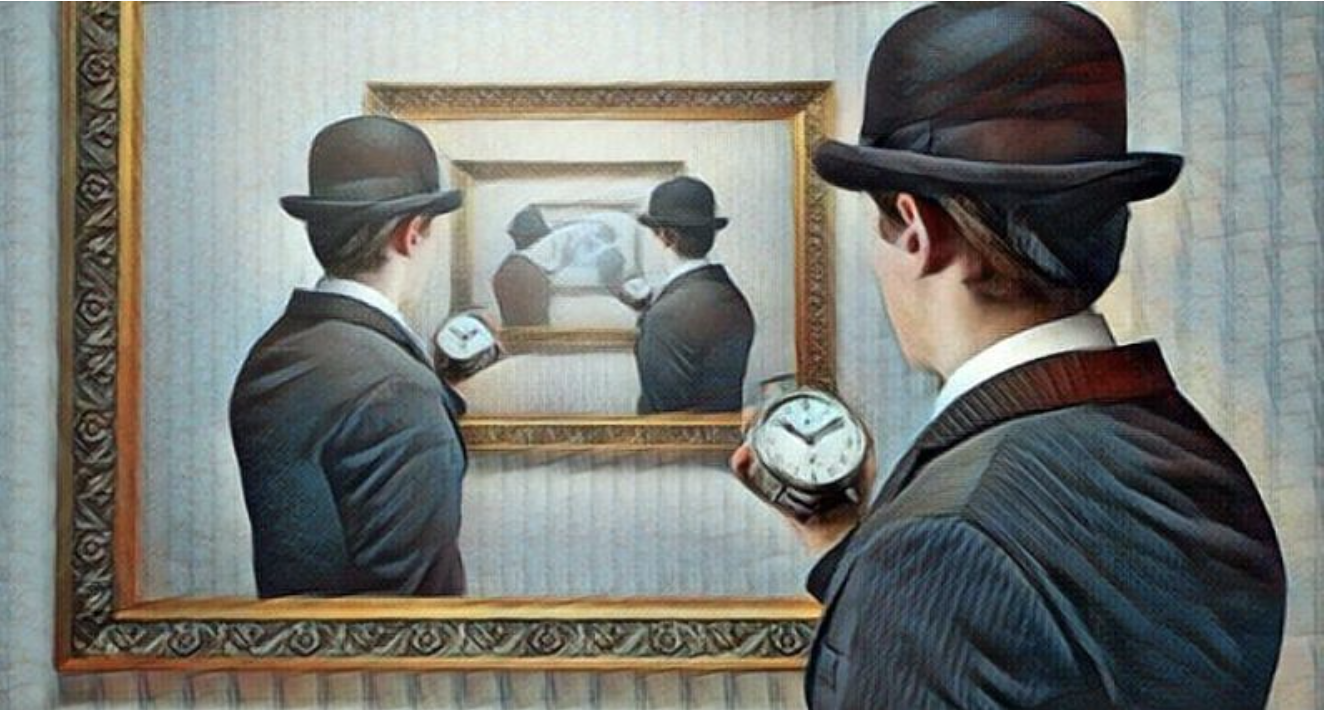
Four Main Theories:
- Dual processing
- Hologram theory
- Divided attention
- Neurological dysfunction
DUAL PROCESSING
The dual processing theory suggests that while our brains are taking in all the pieces of information from a scene, our cognitive processes–which are usually in sync–become briefly asynchronous, causing a slight delay in information retrieval and thus the interpretation of the late information as a separate event. Let’s use the same lunch hall example from earlier. When seated with your friend, your brain is taking in the warm smell of the soup of the day, the loud chatter of classmates around you, and the distinct school colors painted across the walls, all of which are senses contributing to your brain’s assessment of the current environment. With so much information, it is possible that the retrieval and familiarity of the event could become uncoordinated. Thus, it could cause you to feel like you’ve already experienced this scene, creating a déjà vu moment.
HOLOGRAM THEORY
The hologram theory suggests that déjà vu has more to do with our memory recall. The term “hologram” is used here to describe how memory information is stored in the brain. Similarly to how a hologram is made up of dispersed fragments to create its complete image, our brain’s stored memory information is distributed across the neural network, requiring just a piece of the memory to trigger the recall. For example, in the lunch hall scenario, the food tray in front of you is organized with the same components of a past lunch you’ve had. Our brains then try to retrieve a deep and distant memory by checking against our past experiences, and when the memory is not fully recollected, we feel that uneasy sensation commonly experienced during déjà vu.
DIVIDED ATTENTION
The divided attention hypothesis is another potential explanation for déjà vu in that our attention can be split as we take in many environmental cues, some of which we can take in subconsciously. As a result, when we return our full awareness to the scene, we may feel as though we’ve seen it before. For example, you’re seated back at that lunch hall with your friend. You’ve been in this familiar setting with this familiar person and you are distractedly listening to what they are telling you, but what you did not actively pay attention to or know that your brain had even noticed were the shoes your friend is wearing. Meanwhile when that detail comes back into your full attention, it feels like you have seen it before, because you have, you just didn’t realize it.
NEUROLOGICAL DYSFUNCTION
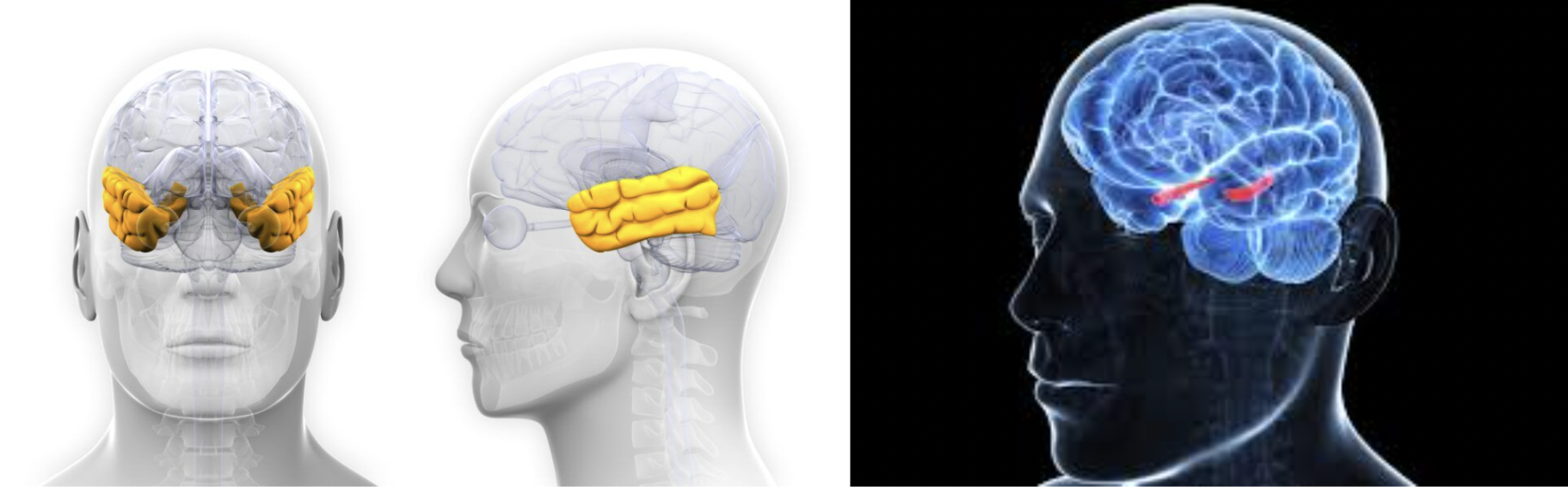
Lastly, déjà vu can be experienced due to neurological dysfunction. One example is during temporal lobe epilepsy (TLE), a condition by which seizures occur in the temporal lobe of the brain 8. This happens when neurons, or nerve cells, miscommunicate in the temporal lobe. Neurons send electrical signals to different parts of our brain to communicate with each other, creating an excitatory or inhibitory (a “go” or “no-go”) response. During a seizure, there is an over-excitation of these neurons, causing a miscommunication and thus an uncontrollable response. The cause of TLE is not yet fully understood, but is believed to occur due to injury to the temporal lobe. Such scarring may arise through traumatic brain injuries, infections like encephalitis and meningitis, or a stroke, just to name a few 15. This type of focal epilepsy can create a feeling of déjà vu due to the temporal lobe’s role in short-term memory and processing of emotions, which occurs specifically within the small, seahorse-shaped brain area known as the hippocampus. The neurological theory of déjà vu suggests that the hippocampus, and thus temporal lobe, plays a big part in these memory glitches due to an over excitement of neurons 7,14.
DIFFERENTIATING DÉJÀ VU
Now that we understand the four most prominent theories of déjà vu, it is important to be able to differentiate between general, healthy déjà vu and neurological, seizure-related occurrences. Notably, the sensation of déjà vu experienced during a healthy onset is considered to be qualitatively different from the experience coming from a seizure aura. Studies have shown that seizure-related déjà vu is often “more intense and accompanied by other unusual sensations like fear, depersonalization, and sometimes vivid memories or hallucinations, while healthy déjà vu is usually a fleeting and benign feeling of familiarity without these additional features” 4. Thus, the experience of general déjà vu is discernible from seizure auras, which is important for knowing when to seek medical attention.
WHERE TO NEXT (OR HAVE WE ALREADY BEEN HERE…)?
So, maybe you’ve had déjà vu before. Maybe you can really relate to these examples and experiences. If so, you are among the 97% of surveyed people who have also experienced it. Being that it is so common, you would think it’s well understood. However, what makes déjà vu so special (and maybe even eerie) is that it happens unexpectedly, contributing to its difficulty to be replicated in a controlled environment such as a research lab. Until we can do this, we will not likely be able to define it more than through theories and ideas. With that being said, hopefully this article has brought you some insight into that bizarre, yet relatable feeling you can’t quite understand and has maybe even set your mind at ease that it’s not necessarily a good or bad thing, but it just happens. Until we can solidify this process, we cannot determine its mechanism, but we sure can sing along to Olivia’s song and take notice of what we think might be happening the next time we experience déjà vu.

REFERENCES:
- https://en.wikipedia.org/wiki/D%C3%A9j%C3%A0_vu#:~:text=Approximately%20two%2Dthirds%20of%20surveyed,with%20neurological%20or%20psychiatric%20illness
- https://health.clevelandclinic.org/déjà-vu-what-it-is-and-when-it-may-be-cause-for-concern
- https://doi.org/10.24869/psyd.2018.21
- https://doi.org/10.1016/j.yebeh.2021.108373
- https://www.sciencefocus.com/the-human-body/déjà-vu
- https://www.mayoclinic.org/diseases-conditions/temporal-lobe-seizure/symptoms-causes/syc-20378214
- https://doi.org/10.1155/2012/539567
- https://www.news-medical.net/health/déjà-vu-Experiences-and-Mental-Illness-Is-there-a-Link.aspx#:~:text=Clinically%2C%20DV%20is%20sometimes%20understood,are%20external%20observers%20of%20themselves.
- https://premierneurologycenter.com/blog/what-is-déjà-vu/
- https://www.verywellmind.com/what-is-the-hippocampus-2795231
- https://www.diva-portal.org/smash/get/diva2:319496/FULLTEXT01.pdf
- https://doi.org/10.1037/0033-2909.129.3.394
- https://www.ted.com/talks/michael_molina_what_is_deja_vu_what_is_deja_vu
- https://my.clevelandclinic.org/health/diseases/17778-temporal-lobe-seizures
- https://www.uofmhealthsparrow.org/departments-conditions/conditions/temporal-lobe-seizure#:~:text=Temporal%20lobe%20seizures%20begin%20in,or%20strange%20odor%20or%20taste
 NeuWrite San Diego
You must be logged in to post a comment.