
Imagine what life would be like with no pain. No headaches or sore throats. You would never experience the anguish of a papercut or a stubbed toe or a sprained ankle. No stomach cramps or muscle soreness. Childbirth or getting kicked in the balls? Piece of cake. Thrown from a moving car? Don’t feel a […]
Author Archives: Catie Profaci
 November
17
November
17
Brain and Blood, Diseases and Drugs
posted by Catie Profaci
Neuroscientists love neurons. We learn about the endless types of neurons, the distinct ways in which they send chemical signals, how they connect to each other, and how these networks underlie behavior. Most of us eat, sleep, and breathe neurons. A smaller, badass group of neuroscientists instead champions glia, the underappreciated cells in the brain […]
 October
31
October
31
Work Alone (A Work from Home Parody)
posted by Catie Profaci
The UCSD neuro grad program made another parody music video! Watch and share! If you’re coming to SD for SfN, join us Monday 11/14 at Parq
 August
11
August
11
Alzheimer’s disease: back to the basics & exploring new frontiers
posted by Catie Profaci
When my grandfather was diagnosed with Alzheimer’s disease (AD), I wanted to better understand what exactly was happening in his brain as his memory slowly deteriorated. Perhaps this drive came from innate scientific curiosity, or perhaps burying myself in the gritty molecular details was my attempt at escaping from the emotional gravity of the situation.
 June
30
June
30
Reflections on #SciComm Boot Camp
posted by Catie Profaci
Communicate. It is part of the scientific process, and yet scientists are notoriously terrible at distilling their work into an understandable form.
 June
02
June
02
Your Brain on Thirsty Thursday
posted by Catie Profaci
Alcohol: loss of motor coordination, a sense of invincibility, amplified emotions, loss of inhibition, hazy memory, blackout. What kind of crazy things are happening in the brain?! How does alcohol even get into the brain?!
 December
03
December
03
Anorexia
posted by Catie Profaci
Anorexia nervosa. A disease for the privileged? Shallow white girls trying to look like fashion models? […] The stereotypes attached to anorexia add to the devastating reality of a serious brain disorder
 September
24
September
24
Altruism: A Story of Amygdalae and Kidneys
posted by Catie Profaci
So, how do you begin to study the neural underpinnings of something so difficult to define or identify? And since virtually all of us do kind things on occasion, how would one compare altruists and non-altruists to see whether there are any differences in brain structure or activity?
 August
27
August
27
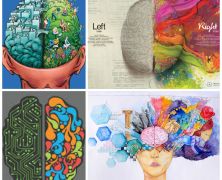
Two brains in one head?: The story of the split-brain phenomenon
posted by Catie Profaci
The idea that a person is right-brained or left-brained is a myth […] However, the brain is indeed split into a right and left hemisphere, and the two are connected by a structure called the “corpus callosum”, a bundle of nerves through which information can be shared.
 June
25
June
25
Aging: Telomeres and Meatballs
posted by Catie Profaci
What causes the slowly encroaching physical signs that we are past our prime? Scientists often gain understanding about a particular physiological process by studying cases in which that process goes awry. Can the aging process go haywire?
 NeuWrite San Diego
You must be logged in to post a comment.