

Keep Holding On How long can you hold your breath for? Is it over two minutes? Pretty impressive–now imagine holding your breath for that long while sinking deeper and deeper below the dark depths of the ocean, reaching distances of 100 feet (about the length of a 10-story building), while thousands of pounds of water […]
Category Archives: Physics and Neuroscience
 December
19
December
19
A 3D Camera for the Brain: The Simplified Science of MRI
posted by Vani Taluja
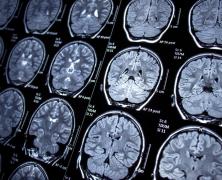
Have you ever dreamed of having Superman’s power of “X-Ray Vision,” or the ability to see through solid objects? While it is uncertain if this superpower was their motivation, medical researchers and physical scientists in the 1970s were able to turn this dream into a sort of reality with the invention of the MRI scan […]
 June
10
June
10
What is a topology and why is it in my neuroscience?!
posted by JC Gorman
[En Español] Time to go back to math class and into a world where a coffee mug and a donut are the same thing. If you ignore distances and shapes, and instead focus on continuity and relations, a donut can easily be morphed into a coffee mug, making them “topologically equivalent”. The hole is the […]
 May
20
May
20
Magnetoreception – a Quantum Sixth Sense
posted by Seraphina Solders
Imagine you are dropped off hundreds of miles away from your home, deep in some unknown forest. Would you be able to find your way home using only your five basic senses – sight, smell, sound, taste, and touch? If you’re anything like me, you may struggle to navigate around your own city without help […]
 April
01
April
01
How do we use magnets to take pictures of the brain?
posted by Seraphina Solders
Magnets are everywhere – they exist in our electronics, cars, refrigerators, and so on. The Earth itself is one giant magnet, which is why we can use compasses to navigate! They also have many incredible biomedical applications, including magnetic resonance imaging (MRI), which allows us to take pictures of biological tissues and organs in a […]
 August
13
August
13
Diffusion MRI: Mapping the structural highways of the brain
posted by Seraphina Solders
Some of my favorite scientific images to look at come from scanning the human brain with a tool called diffusion magnetic resonance imaging (or diffusion MRI). These images depict the long fibers that connect one part of the brain to another in a color-coded fashion, with a beautiful result: a colorful map of the brain’s […]
 July
16
July
16
Perks of Being a Trichromat
posted by egeyalcinbas
As a youngster, many excursions with my grandmother would end with her pointing out the breathtaking combination of hues that graces the sky during golden hour. She would be sure to mention the weather predictions that stem from our folklore: Warm mixtures of pink and lavender, she would tell me, means that tomorrow will be […]
 October
03
October
03
A critical point about the brain
posted by Haylie Romero
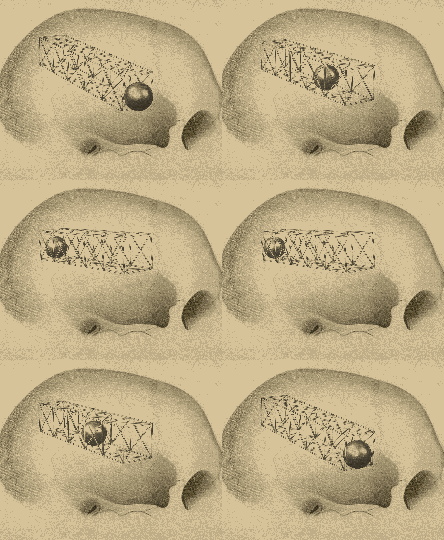
Neuroscience is one of the most fascinating fields of study, spanning science, art and philosophy. Okay, I may be biased here, but if you really think about it, we are trying to understand emotion, motivation, intelligence, and consciousness. We are trying to discover what sets humans apart, what unifies animals, what causes neurological disease, all […]
 June
06
June
06
Speech Synthesis from Brain Activity
posted by Joydeep De
[En español] The existing technology that assists people with speech disabilities is reliant on brain-computer interfaces which translate eye and facial muscle movements into words. However, this translation is limited in speed – approximately 10 words per minute, which is considerably lower than the rate of naturally produced speech (150 words per minute). The process […]
 June
29
June
29
Feelin’ the Beat (Frequency)
posted by Ethan McBride
What do you think when you read the word interference? If you’re like most people, you probably think it’s negative. Colloquially, interference tends to be obstructive or destructive, like interference keeping your radio or TV from picking up a station, or pass interference in football. I’m NeuWriting to inform you of a recent study in […]
 NeuWrite San Diego
You must be logged in to post a comment.