
Biomedical scientists, including many neuroscientists, often get into the scientific research game with the goal of seeing a future in which their work can directly impact human health and wellbeing. There is often a disconnect, however, between the long hours in the lab working with cells, rodents, or computers and the eventual future applications of […]
 June
10
June
10
What is a topology and why is it in my neuroscience?!
posted by JC Gorman
[En Español] Time to go back to math class and into a world where a coffee mug and a donut are the same thing. If you ignore distances and shapes, and instead focus on continuity and relations, a donut can easily be morphed into a coffee mug, making them “topologically equivalent”. The hole is the […]
 May
27
May
27
How to Write a Scientific Paper
posted by Nicole Mlynaryk
Most people learn how to write a scientific paper or proposal through trial and error. This guide hopes to make that process easier.
 May
20
May
20
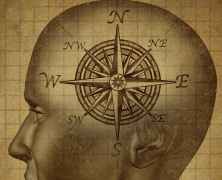
Magnetoreception – a Quantum Sixth Sense
posted by Seraphina Solders
Imagine you are dropped off hundreds of miles away from your home, deep in some unknown forest. Would you be able to find your way home using only your five basic senses – sight, smell, sound, taste, and touch? If you’re anything like me, you may struggle to navigate around your own city without help […]
 May
13
May
13
WHAT DO SCIENTISTS DO APART FROM SCIENCE?
posted by Jorge Urresti
When most people think about science in general, what comes to mind first is the traditional image of a scientist in a white lab coat, crouched over a table in the lab, looking at a colorful solution through big protective goggles. And for the most part, if we refer to the work that is being […]
 May
07
May
07
Take a Trip Down Memory Lane: the study of nostalgia
posted by Susan Lubejko
Living through a global pandemic with limited access to friends, family, and fun has undoubtedly left many of us feeling emotional. Perhaps you’ve been listening to music during your many hours at home and a song has come on that forces you to reminisce on a particular trip you took with your best friend in […]
 April
29
April
29
How Metal can regain its Sound: the Science of Cochlear Implants
posted by megkirch
This article discusses various scenes from the film Sound of Metal. Although what is discussed likely will not come as any great surprise to anyone generally familiar with the film, be aware that mild “spoilers” are ahead! If you haven’t yet seen the film but choose to read on, this article contains some clips from […]
 April
22
April
22
Neuromorphic engineering: how electronics are learning from the brain
posted by JC Gorman
[En Español] “As engineers, we would be foolish to ignore the lessons of a billion years of evolution” -Carver Mead Scientists have been pursuing artificial intelligence that rivals what the human brain can do for centuries. The brain is remarkable in some computer-like aspects; it processes multiple complex tasks in parallel with high efficiency and […]
 April
15
April
15
Why UC student researchers need a union
posted by Laura Beebe
Right now, a group of graduate student researchers across the University of California are working to form a union. What does this mean? How is science made? The process of becoming a full-time (“tenure-track”) neuroscientist or biologist at a university or other research institution involves a long training process. Students must obtain an undergraduate degree […]
 April
08
April
08
Choosing a Research Lab
posted by Catie Profaci
For our readers in or about to begin PhD programs, I have put together the following advice for choosing and assessing research rotations. […] there are not necessarily “right” answers to all the questions below – just make sure the answers work for YOU.
 NeuWrite San Diego
You must be logged in to post a comment.