
It happens to us all – you doze off in a less-than-ideal position, and when you awaken, there’s a part of your body that has gone numb. It’s certainly aggravating – your limb is unusable and unresponsive for several moments, flopping about with uncomfortable tingles. Commonly, we complain that our feet, legs, fingers, or arms […]
Category Archives: Sensory Systems
 August
22
August
22
The Science of Sensitivity
posted by Anna McTigue
Insights from the Neuroscience of Highly Sensitive People I am driving home as the sun beams through the windshield and straight into my face. It’s beautiful: the orange glow of the golden hour sky, the demanding brightness seen through squinted eyes. But it also adds to my dread about the half-an-hour of incoming stop-and-go traffic. […]
 April
13
April
13
Your Brain on Stories
posted by Donovan Cronkhite
The brain is wired for stories, but what exactly happens to it when we hear and tell stories?
 February
03
February
03
Plants: What are they thinking about?
posted by Joseph Herdy
As fauna, we look at the floral contemporaries in our lives as little more than living scaffolding: unthinking entities more akin to the truly lifeless- like mountains -compared to us as fast paced, conscious creatures. However, if you’ve ever felt like your house plants were feeling a little neglected after the holiday travels, maybe you’re […]
 December
09
December
09
Mal de Débarquement: The Science of Land Sickness
posted by Seraphina Solders
Recently I was lucky to spend seven days on a catamaran out at sea with a small group of (COVID-vaccinated) friends. We traveled around the Gulf of California, witnessing truly amazing sights like manta rays jumping out of the water, sea birds diving into the water, and turtles floating along in the swell. This was […]
 June
17
June
17
How Neuroscience Tools Can Help Patients Regain Their Vision
posted by Susan Lubejko
Biomedical scientists, including many neuroscientists, often get into the scientific research game with the goal of seeing a future in which their work can directly impact human health and wellbeing. There is often a disconnect, however, between the long hours in the lab working with cells, rodents, or computers and the eventual future applications of […]
 May
20
May
20
Magnetoreception – a Quantum Sixth Sense
posted by Seraphina Solders
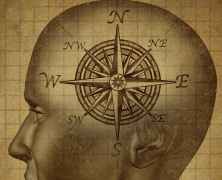
Imagine you are dropped off hundreds of miles away from your home, deep in some unknown forest. Would you be able to find your way home using only your five basic senses – sight, smell, sound, taste, and touch? If you’re anything like me, you may struggle to navigate around your own city without help […]
 November
19
November
19
Neuroscience… of the bladder
posted by Catie Profaci
When we think of neuroscience, we often think of the brain. […] But so much of neuroscience is concerned with happenings outside the brain itself. For instance, neural signaling controls and coordinates our muscle movements, alerts us when our stomach is empty, produces a physiological response to arousal, and sends a painful alarm when we damage our skin. Neural signaling is also important for telling us when it’s time to pee.
 November
12
November
12
How Light Leads to Darkness: A Neural Link Between Nighttime Light and Depression
posted by Nicole Mlynaryk
Nighttime light exposure can lead to depression. A new study brings us closer to understanding why, and what we can do about it.
 July
16
July
16
Perks of Being a Trichromat
posted by egeyalcinbas
As a youngster, many excursions with my grandmother would end with her pointing out the breathtaking combination of hues that graces the sky during golden hour. She would be sure to mention the weather predictions that stem from our folklore: Warm mixtures of pink and lavender, she would tell me, means that tomorrow will be […]
 NeuWrite San Diego
You must be logged in to post a comment.