
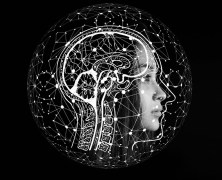
The human brain has been shaped over hundreds of thousands of years, with evolution selecting for traits that helped our species survive and thrive. So why do we still have so many genes that make us struggle? Why did our remarkable cognitive capacity come with such a susceptibility to disorder?
 August
15
August
15
“Neurorights” and Why You Need Them
posted by Elena Blanco-Suarez, Ph.D.
[En español] Most of us, especially those with an interest in technology, are fascinated by all that AI (Artificial Intelligence) and neurotechnologies are achieving. We use it on a daily basis, more than we even realize. For instance, I use Google’s AI-powered predictions pretty much every day to figure out how I can get to […]
 August
08
August
08
Sharing the Stories of Women in Neuroscience
posted by megkirch
One year ago, Dr. Nancy Padilla was reviewing a list of speaker names for a seminar series organized by postdoctoral fellows in her department. She saw nothing wrong with the list as it was full of prominent and excellent neuroscientists – that is, until her colleague pointed out that the list did not include a […]
 August
01
August
01
Why are you yawning right now?
posted by Susan Lubejko
As a graduate student, spending an early morning or late night in the lab is not uncommon. During those hours, it’s also not uncommon to catch me in the midst of a yawn (or many). This makes sense, though; I’m tired from little sleep or a long day. However, you may be surprised to learn […]
 July
25
July
25
In a world of “blind imagination”: The science of Aphantasia
posted by megkirch
[En Español] Picture yourself in your childhood home. Imagine your bedroom – your bed, perhaps some posters on the wall, and whatever other salient features you can conjure with your mind’s eye. Do you see yourself in it, or are you seeing it as though through your own eyes…or do you not “see” anything at […]
 July
18
July
18
Our Sensitive Stomach: The Enteric Nervous System
posted by Nicholas A. Nelson
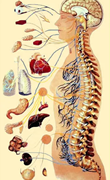
There is a lot more to the gut than will be covered here – hormone signals, the microbiome, and gut contributions to nervous system diseases will be topics for later articles. Worry not – these functions are not forgotten, but for the ease of digestion (sorry) and clarity of each topic, will be segmented into […]
 July
12
July
12
How do you feel? Interoception- the new science of emotion
posted by Andy Arnold
[En español] What happens when someone asks, “How do you feel?” Besides possibly uttering the rote response, “good, how are you”—what is the process of sensing how you’re really feeling in that moment? It seems to involve interoception—the sense of the physiological condition of the body. Interoception mediates many different sensations—pain, temperature, itch, hunger, sexual […]
 July
04
July
04
Gay Animals and the Science of Sexuality
posted by Jess Haley
Earlier this year, a New York Times headline struck my attention: The Gay Penguins of Australia. The story details the lives of Sphen and Magic, two male Gentoo penguins at the Sea Life Sydney Aquarium in Australia. Sphen is 6 years old and rather quiet. Magic likes to chase after toys and is 3 years […]
 June
27
June
27
NeurosciANTS
posted by Joseph Herdy
[En español] You probably walk past thousands of ants every day and give them no more than a passing glance, but the ecological impact of an entire ant colony is comparable to that of enormous animals like elephants. Together in colonies that can surpass 300 million individuals, ants have a profound effect on the landscapes […]
 June
20
June
20
Exosomes: Helping you stay in touch with your trillions of closest friends.
posted by Haylie Romero
[En español] There are roughly 37.2 trillion cells in the human body. That’s nearly 5 thousand times the total number of people on the entire planet, and all these cells must somehow work together to make you “You.” Each cell has a set role to play in keeping you healthy and functioning, but how do […]
 NeuWrite San Diego
You must be logged in to post a comment.