

Chalasani S.H., Chronis N., Tsunozaki M., Gray J.M., Ramot D., Goodman M.B. & Bargmann C.I. (2007). Dissecting a circuit for olfactory behaviour in Caenorhabditis elegans, Nature, 450 (7166) 63-70. DOI: 10.1038/nature06292
Category Archives: UCSD
 April
29
April
29
Functional Compartmentalization and Viewpoint Generalization Within the Macaque Face-Processing System
posted by UCSDNeuro
One thing humans, and in fact all primates can do with remarkable ease compared to computers is face recognition, especially across a range of viewing conditions. At her lab at Caltech, Doris Tsao tries to explore the way the brain does this. In her recent Science paper, she explored view invariance in the recently discovered […]
 March
30
March
30
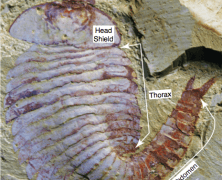
Arthropods: More than just a pretty face, they have brains that can preserve for over half a billion years
posted by UCSDNeuro
Behold the Arthropods. They are invertebrates with exoskeletons, segmented bodies and jointed appendages (examples: insects, arachnids, crustaceans). Exquisitely versatile and adaptable, they comprise the most species-rich phylum and they’ve been around since at least the early Cambrian Period (541-485.4 million years ago, (Mya)). Look where you’re standing. Chances are that an athropod’s already been there […]
Launching our new “Spikes in the Classroom” outreach module
posted by UCSDNeuro
We are incredibly excited to announce the addition of a new module to our outreach efforts. When we go into a classroom, we bring plenty of dead brains… rare jarred brains of porpoises and penguins for our “Comparative Anatomy” module and squishy sheep’s brains that students get to touch and hold and inspect (always with […]
We are all connected: Major insights are emerging from human connectomes
posted by UCSDNeuro
David Van Essen is from Washington University where he is an Edison Professor of Neurobiology and Department Head of Anatomy and Neurobiology. He is also a principle investigator of the Human Connectome Project (HCP), a project designed to map the human connectome as accurately as possible in a large number of normal adults and make […]
Move it, move it!: Modeling stereotyped behaviors in C. elegans
posted by Melissa Galinato
A big question in biology is how to understand complex animal behavior. We want to know why it happens, how it happens, what are predictors of those behaviors. Caenorhabditis elegans is an excellent animal model for studying behavior because its movements can be simplified and described in four discrete dimensions or “eigenworms”. (See figure 1 below.) […]
Gene Networks Regulating Cortical Neuron Fate
posted by UCSDNeuro
The generation of neuronal diversity ultimately determines the architecture and complexity of the brain. Birthdate and place are key factors contributing to the fate of a neuron, however those two factors alone are not sufficient to predict exactly how neurons differentiate with markedly different projections, connectivity, morphology, electrophysiology, and genetic expressions. In some instances during […]
Joaquín Fuster: Working Memory, Cognits, and the Perception-Action Cycle
posted by kkiritah
In the 1920s, Jakob von Uexküll (the theorist responsible for the notion of umwelt) described the sensory-motor cycle through which an animal modifies the environment, thereby modifying its own perception of the environment, which leads to further action upon the environment, and so forth, until a particular goal is achieved (Fig. 1a). In the primitive animal, […]
 June
02
June
02
When Marmosets Call
posted by Ashley Juavinett
Inhabiting a complex and noisy environment in the Brazilian forest, the common marmoset faces a continuous challenge to successful vocal communication. Much like having a conversation in Grand Central Station at rush hour, the marmoset has to strategically monitor its acoustic context and structure its calls accordingly. Understanding how these animals use various cortical systems […]
 NeuWrite San Diego
You must be logged in to post a comment.